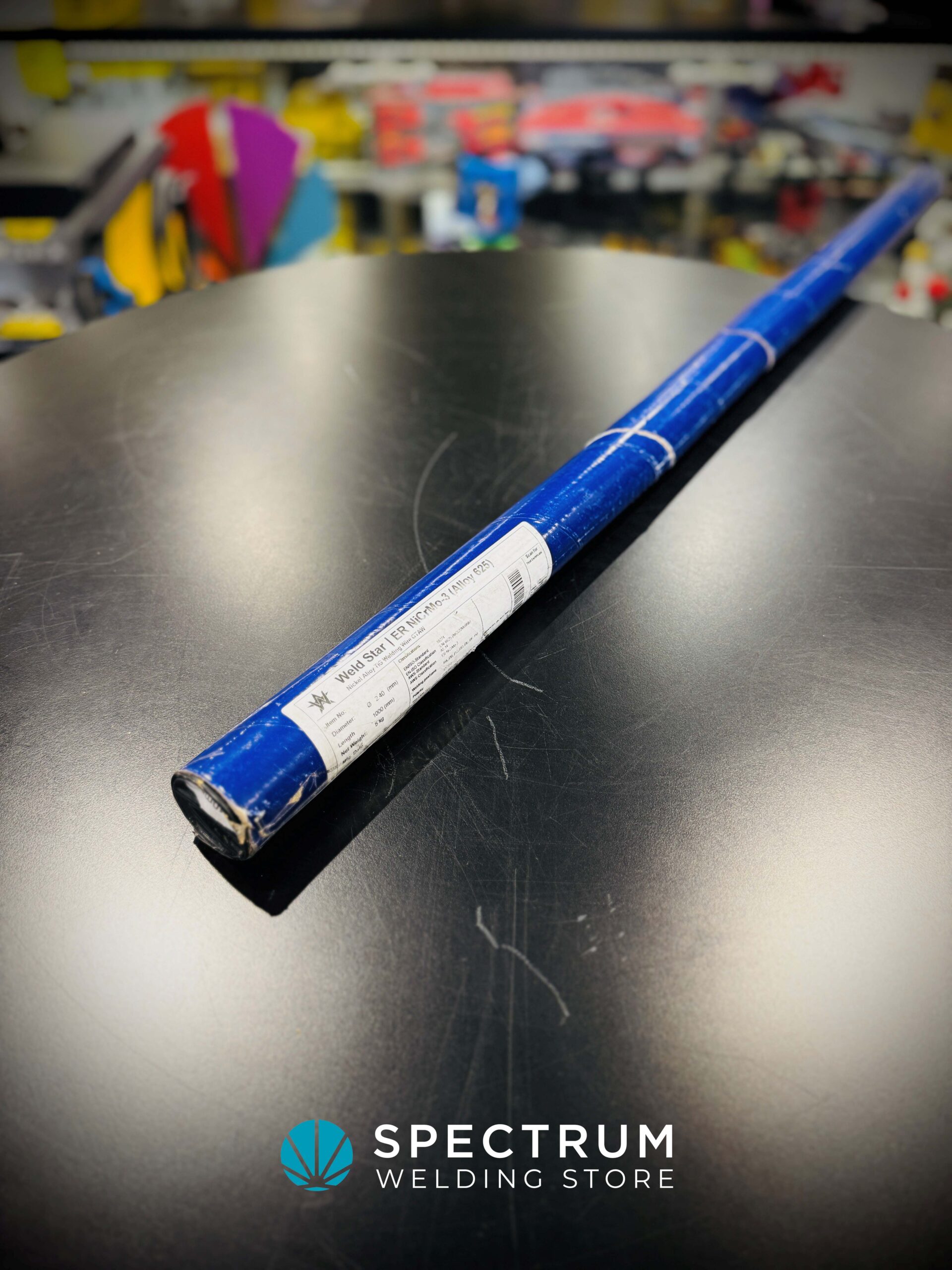
2.4mm Inconel 625 TIG filler rod | 5kg

£400.00 exc VAT

Inconel 625 2.4mm x 5kg TIG filler rod, in stock at Spectrum Welding.

Inconel 625 offers superior performance over stainless steel primarily in extreme environments involving high temperatures, aggressive corrosion, and high mechanical stress. Its nickel-based composition provides enhanced stability and strength compared to the iron-based composition of stainless steel.

Superior High-Temperature Performance

  • Inconel 625 maintains its structural integrity and strength at temperatures where stainless steel would deform or lose mechanical properties
  • Higher Maximum Service Temperature: Inconel 625 can operate effectively up to around 980°C (1800°F) while retaining significant strength, whereas the strength of most stainless steel grades, like 316, drops significantly above 550°C (1022°F)
  • Creep (Crack) and Fatigue Resistance: The alloy has superior resistance to creep (cracking), which is slow deformation under constant stress and fatigue from thermal cycling. Inconel then becomes crucials for applications including jet engines and gas turbines
  • Oxidation Resistance: A stable, protective oxide layer forms on the surface of Inconel 625, enhancing its resistance to oxidation and scaling at high temperatures, a property superior to the passivation layer on stainless steel in extreme heat

Enhanced Corrosion Resistance

  • The high nickel, chromium, and molybdenum content in Inconel 625 provides exceptional resistance to a wide range of corrosive elements that would compromise stainless steel
  • Chloride Environments: Inconel 625 is virtually indestructible to chloride-induced stress corrosion cracking, pitting, and crevice corrosion, making it ideal for marine, offshore oil and gas, and seawater applications
  • Acid Resistance: It performs far better than stainless steel when exposed to a broad spectrum of acids, including sulfuric, hydrochloric, nitric, and phosphoric acids, in both oxidizing and reducing conditions

Superior Mechanical Properties

  • Inconel 625 generally exhibits superior mechanical strength, particularly in demanding conditions
  • Tensile and Yield Strength: Inconel 625 has significantly higher tensile and yield strength compared to standard grades like 316 stainless steel, even at room temperature
  • Toughness: It maintains better toughness and strength under mechanical stress and rapid temperature changes

In summary, the key trade-off is that 316 stainless steel is more affordable and easier to machine for general applications, while the benefits of Inconel 625 such as strength, resilience and immunity in extreme conditions, often justify its higher cost for critical, high-reliability systems.

Product Description

SPECIFICATIONS:

  • 2.4mm diameter
  • ER NiCrMo-3 (Alloy 625)
  • Inconel 625 TIG filler metal used with Inconel 601, Incoloy 800, Alloy 625, Alloy 825, Alloy 926
  • Welding Positions: EN ISO 6947 – PA, PB, PC, PD, PE, PF, PG
  • Shielding gas: Pure argon
  • Polarity: DC (-) with ‘+’ earth
  • Tensile strength: 760
  • Yield strength: 415
  • 5kg tube (1000mm long)

Inconel TIG Technique:

  • Thoroughly clean the joint area immediately before welding. Degrease the surface, remove all oxides (via grinding or brushing with dedicated iron-free tools), and wipe with a solvent like acetone to prevent contamination and porosity
  • Bevel / prep work /root gap / root face / and welding machine settings, all need to be precise
  • Inconel 625 requires high heat but is sensitive to overheating and excessive travel speeds. With multi-runs, the metal must cool down before the next pass
  • Maintain a steady, controlled pace to ensure proper fusion without creating microfissuring in the heat-affected zone (HAZ)
  • Use a smaller tungsten, make sure the point is very sharp before every weld, adopt a shorter arc, and feed in filler rods continuously
  • The weld pool may appear ‘sluggish’ and have a dark ‘skin’ floating on the edges compared to stainless steel. This is normal for Inconel and is no cause for alarm
  • When ending a weld, ease off the heat slowly using the foot pedal or machine controls, with plenty of post-gas (after ending the weld, don’t pull the torch out until all post-flow is finished)
  • Pull the weld puddle to the side of the joint to avoid center-line cracking or crater defects
  • For single-sided full penetration welds, ensure the root face thickness is no more than approx. 1.5mm. Using a removable copper / nickel alloy / or aluminium backing strip (chill bars), can help control the root bead shape
  • Ensure proper inert gas purging for the backside of the weld (root pass) if possible, to prevent oxidation, especially for X-ray quality work
  • Grinding the surface and in between layers (rather than buffing) can help the material wet out better and manage the floating oxides
  • When welding a root pass, start on the sidewall, pull the filler wire into the bottom of the joint, and use steady stringer beads without weaving
  • When filling and capping passes,  use multi-pass techniques for thicker sections. A steady drag technique is often recommended, fighting gravity by pointing the rod slightly up on vertical sections
  • To avoid craters, slowly pull the filler wire up and out of the puddle as you stop
Want more information? Call us...
01246 205 267 info@spectrumweldingsupplies.co.uk
Filler Classification

ERNiCrMo-3 Inconel 625

Filler Wire Type

Solid Wire

All Weld Material

Inconel 625

Weld Metal Type

TIG Filler Metal

Downloads