Product Description
SPECIFICATIONS:
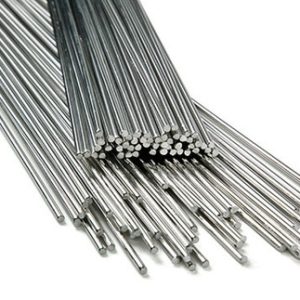
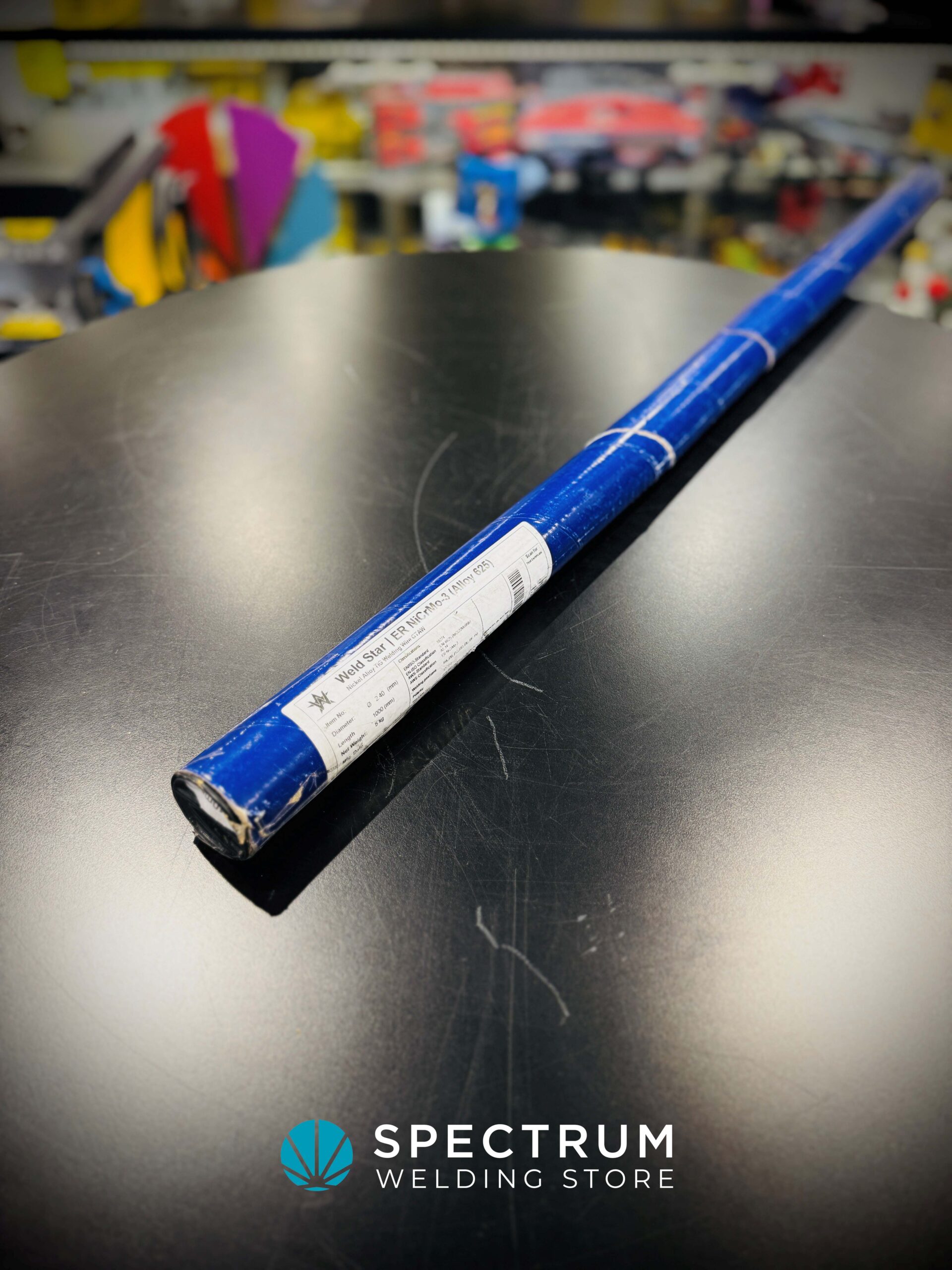
- 2.4mm diameter
- ER NiCrMo-3 (Alloy 625)
- Inconel 625 TIG filler metal used with Inconel 601, Incoloy 800, Alloy 625, Alloy 825, Alloy 926
- Welding Positions: EN ISO 6947 – PA, PB, PC, PD, PE, PF, PG
- Shielding gas: Pure argon
- Polarity: DC (-) with ‘+’ earth
- Tensile strength: 760
- Yield strength: 415
- 5kg tube (1000mm long)
Inconel TIG Technique:
- Thoroughly clean the joint area immediately before welding. Degrease the surface, remove all oxides (via grinding or brushing with dedicated iron-free tools), and wipe with a solvent like acetone to prevent contamination and porosity
- Bevel / prep work /root gap / root face / and welding machine settings, all need to be precise
- Inconel 625 requires high heat but is sensitive to overheating and excessive travel speeds. With multi-runs, the metal must cool down before the next pass
- Maintain a steady, controlled pace to ensure proper fusion without creating microfissuring in the heat-affected zone (HAZ)
- Use a smaller tungsten, make sure the point is very sharp before every weld, adopt a shorter arc, and feed in filler rods continuously
- The weld pool may appear ‘sluggish’ and have a dark ‘skin’ floating on the edges compared to stainless steel. This is normal for Inconel and is no cause for alarm
- When ending a weld, ease off the heat slowly using the foot pedal or machine controls, with plenty of post-gas (after ending the weld, don’t pull the torch out until all post-flow is finished)
- Pull the weld puddle to the side of the joint to avoid center-line cracking or crater defects
- For single-sided full penetration welds, ensure the root face thickness is no more than approx. 1.5mm. Using a removable copper / nickel alloy / or aluminium backing strip (chill bars), can help control the root bead shape
- Ensure proper inert gas purging for the backside of the weld (root pass) if possible, to prevent oxidation, especially for X-ray quality work
- Grinding the surface and in between layers (rather than buffing) can help the material wet out better and manage the floating oxides
- When welding a root pass, start on the sidewall, pull the filler wire into the bottom of the joint, and use steady stringer beads without weaving
- When filling and capping passes, use multi-pass techniques for thicker sections. A steady drag technique is often recommended, fighting gravity by pointing the rod slightly up on vertical sections
- To avoid craters, slowly pull the filler wire up and out of the puddle as you stop